The Best 4×4 Camper for a Northern Lights Trip in Iceland
Planning a Northern Lights trip in Iceland means thinking harder about your vehicle than you might for a summer road trip. You’re driving in the dark, parking up for hours at a time, and often moving on short notice when the sky clears. The right camper can make that whole process far less stressful.
This article breaks down the different types of 4×4 camper worth considering for an aurora-focused trip, plus the practical factors that matter more than horsepower or badge. By the end, you should have a clearer idea of what to look for before you book.
A Compact 4×4 Camper for Solo Travellers and Couples
A compact 4×4 camper is the simplest option for one or two people chasing clear skies. Smaller dimensions make it easier to manoeuvre on narrow rural roads at night, and there’s less vehicle to heat when you’re setting off at 2am because the forecast has suddenly turned.
Reykjavík typically has only four to five hours of daylight in late December, according to Visit Reykjavík, so a lot of your trip happens after dark regardless of plans. A smaller camper that warms up quickly is a genuine practical advantage here, not just a comfort detail.
Before booking, it’s worth browsing a range of 4×4 campers for winter in Iceland to compare which compact models include insulated builds or auxiliary heating as standard, rather than assuming every 4×4-badged van is equipped the same way. Also check that the vehicle has genuine four-wheel drive rather than marketing language borrowed from an all-wheel-drive passenger car.
A Mid-Size 4×4 Camper for Small Groups
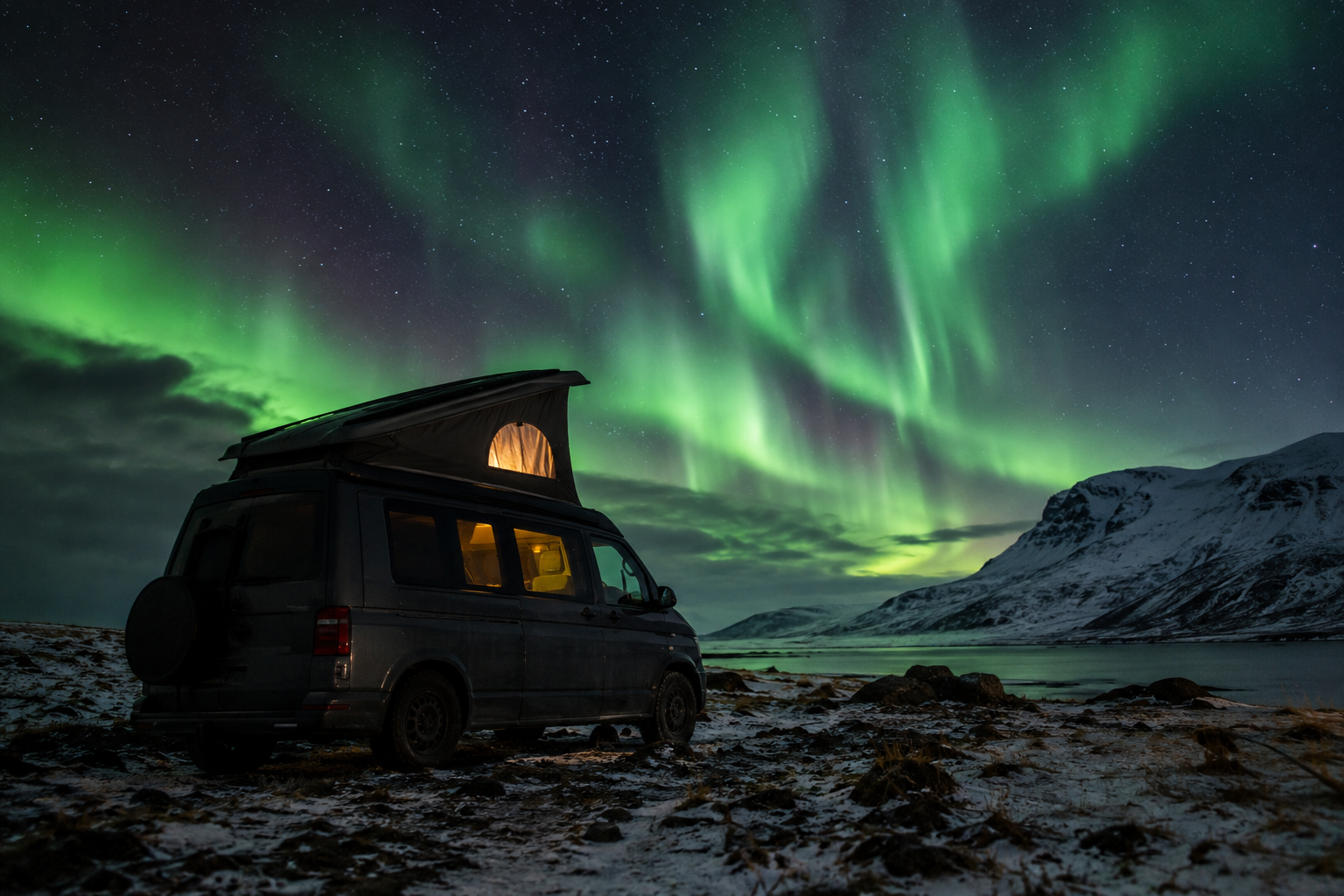
If you’re travelling with friends or a partner and want more than a two-berth layout, a mid-size 4×4 camper with a raised or fixed high-top roof gives standing room without the bulk of a full motorhome.
These vehicles typically sit higher off the ground than a standard campervan, which is useful when you need to pull off a gravel verge to watch the sky without worrying about the underside of the vehicle. It’s a small detail, but it matters more than people expect on rural Icelandic roads in winter.
As with the compact option, don’t assume size equals capability. Confirm directly with the rental company which models in their fleet are genuinely built for winter driving conditions, rather than guessing from the exterior.
A 4×4 Camper With Auxiliary Heating
Aurora season in Iceland runs roughly from late August through to mid-April, with October to March generally considered the strongest window. Reykjavík’s winter temperatures typically sit between 0°C and 4°C from December to February, though wind chill can make it feel considerably colder.
That combination of cold and long, dark evenings means heating is arguably more important than the drivetrain itself. A diesel-fired heating system, often built into the cab separately from the engine, lets you keep the camper warm for hours while parked up watching the sky, without needing to leave the engine running.
This matters more for aurora hunting than for a standard summer trip, since you’re often stationary for long stretches rather than driving between stops. Electric heating that relies on an external hook-up is less useful here, since you won’t always be parked at a site with power access.
A 4×4 Camper With a Rooftop Tent
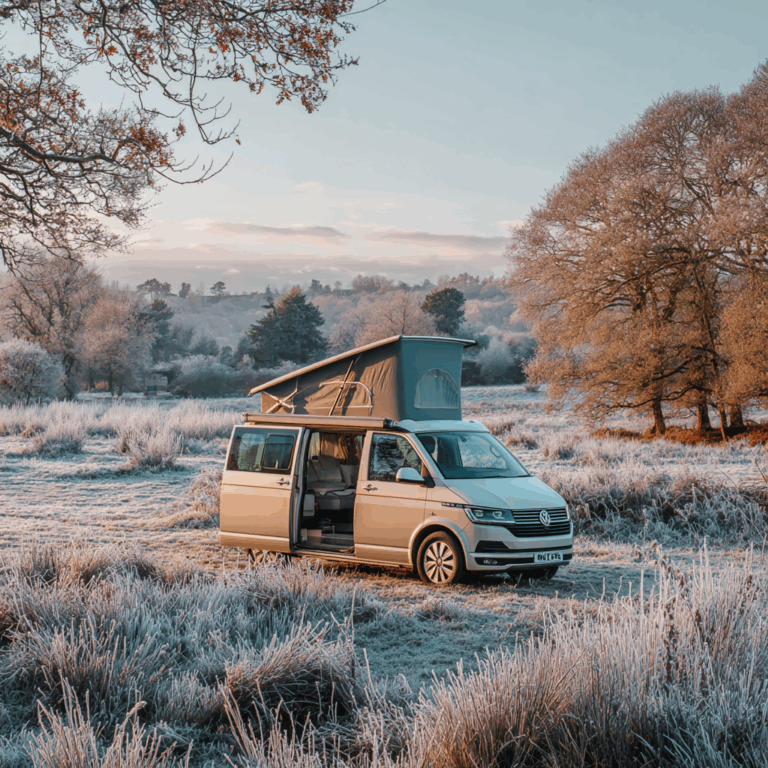
A rooftop tent configuration suits photographers and anyone who wants to move quickly between locations in one evening. Setup and pack-down are faster than with a low-profile build, and the elevated position can occasionally offer a slightly better outlook, depending on the parking spot.
This set-up is popular with the kind of traveller who might check the forecast, drive to one viewpoint, find it clouded over, and relocate within the hour. Aurora activity itself is unpredictable, and cloud cover, moonlight and nearby lighting can all affect visibility, so flexibility has real value.
The trade-off is that a rooftop tent is generally colder than a fully enclosed camper body. A good sleeping bag rating is worth packing for, rather than relying on the tent’s insulation alone.
Why 4×4 Access Makes a Difference for Aurora Hunting
This isn’t about a specific vehicle type, but about why four-wheel drive earns its place on this list at all. Getting away from Reykjavík’s lighting noticeably improves your chances of a clear view, and Visit Reykjavík recommends heading to darker spots outside the city where practical.
Reaching those quieter spots, places like Þingvellir National Park or parts of the Snæfellsnes Peninsula, often means rural roads that aren’t always gritted or ploughed as quickly as the Ring Road. Four-wheel drive and decent ground clearance give you more margin on packed snow or ice than a standard two-wheel-drive van.
It’s not a free pass, though. Weather in Iceland can change quickly and roads can close with little notice, so four-wheel drive doesn’t remove the need to check current conditions before setting out.
One Mistake to Avoid: Expecting Winter F-Road Access
A common misunderstanding is assuming that because a camper is 4×4, it can be driven on Iceland’s F-roads year-round. In practice, F-roads into the Highlands close for the winter season and typically don’t reopen until summer conditions allow safe passage.
For a Northern Lights trip, this isn’t actually a drawback. The aurora-viewing spots worth reaching in winter are generally on paved or maintained gravel roads, not Highland tracks. The value of a 4×4 camper here comes from traction, stability in wind, and heating, not from Highland access that isn’t available at this time of year anyway.
Before booking, it’s worth checking which roads and conditions the rental company expects you to plan around during winter, rather than assuming 4×4 capability extends further than it does.
Bringing It Together
No single feature makes a camper the right choice for an aurora trip on its own. What matters is the combination: a drivetrain suited to winter roads, heating that works through long, stationary evenings, and a realistic understanding of where you can and can’t drive at this time of year.
Since aurora viewing depends so heavily on weather and cloud cover, flexibility is often more valuable than any individual spec. A camper that lets you relocate, stay warm, and wait out a cloudy patch gives you a better shot than chasing a single fixed viewpoint.
FAQs
Do all 4×4 campers in Iceland include winter tyres?
Winter-appropriate tyres are standard practice for vehicles used during the colder months in Iceland, but it’s worth confirming directly with the rental company rather than assuming, since specifications can vary between models.
Can I see the Northern Lights without a 4×4 camper?
Yes, plenty of viewing spots are reachable on main roads. A 4×4 simply gives you more margin on rural routes affected by snow or ice, and more flexibility if you need to relocate.
When is the best time to see the Northern Lights in Iceland?
Aurora season generally runs from late August to mid-April, with October through March considered the strongest stretch for darkness. On clear evenings, activity can become visible from around 4pm during the darkest months.
DISCLOSURE | This post has been placed by a third party as part of an agreed brand collaboration.