OPINION | We Need To Talk About Temu and TikTok Dupe Culture and How They Impact Artists & Orignal Creators
This is an opinion piece from my personal perspective. Some of you may know that I have a second side hustle. As well as running this blog, I also make jewellery and am an Etsy seller.
I’m feeling increasingly frustrated at the growing number of my peers who are having their designs stolen and their images blatantly used by overseas manufacturers and yet can’t do anything about it.
It’s not right and it sucks and this blog post has absolutely nothing to do with camping, but this is a topic that matters to me, so here are my thoughts on the likes of Temu and rampant ‘dupe’ culture as seen on TikTok.
Over the last few months, it’s been impossible to escape the latest marketplace for cheap goods from China, Temu.
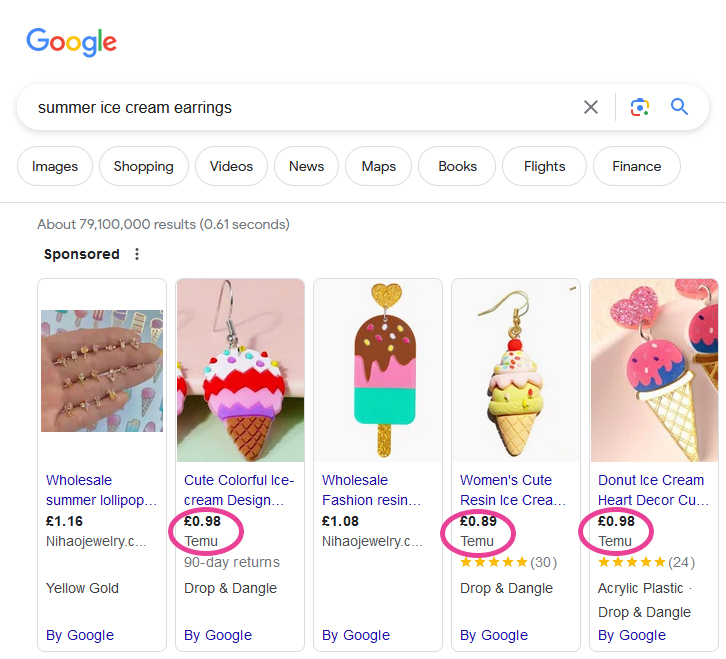
With a marketing budget of what must be many millions and a strategy that sees them doing anything they can, including operating at a loss in order to gain market share, Temu has come to dominate Google search and shopping results for everything from craft supplies to clothing.
Just like Shein, Wish, AliExpress and others, the new kid on the block sells anything and everything direct from manufacturers and is aggressively marketed all over the internet and TV streaming services.
Apart from the obvious ecological problems related to overproduction, waste and transportation as well as the extensive claims of forced and child labour, there’s another fact that people seem perfectly happy to ignore.
It’s well known by those of us who draw, design and create for a living, that websites like Temu not only routinely steal product photos which are used to mislead customers into thinking they are getting the original, superior product, but they steal the designs and manufacture them too.
The defence I’ve often heard is that people can’t afford to shop elsewhere. We all managed to cope before without Temu, Wish etc. so what has suddenly changed? It’s a really lame excuse.
Marketing is designed to put products in front of your eyes and to keep putting them there so they stay in your head. It’s designed to make you feel good, to give you warm fuzzy feelings and positive associations which persuade you into buying, even if it’s something you don’t really need, or something you only want fleetingly.
“Shop like a thieving pound shop povo” would be a more fitting tagline for Temu.
The much-used tagline of “Shop like a billionaire” is bizarre in the extreme. I’m certain that billionaires would have no need to trawl through a poorly designed migraine of a website to buy 89p novelty earrings that turn your ears green or a poorly printed, badly fitting t-shirt for £5.39.
I think perhaps “Shop like a thieving pound shop povo” would be a more fitting tagline for Temu.
The fact that people will download an app like this is astonishing. Ask yourself why a retailer would really need an app. What can an app do that a website can’t do? The answer is obvious. It’s your data they want.
When you download the Temu app, you’re granting access to way more of your personal data than a retail website is legally allowed to collect. For a company whose HQ is in China, if that’s not a concern to you, it really should be.
I totally understand using sites like these in some circumstances. Let’s say you need a cheap fancy dress outfit, a prop for a party you can’t find anywhere else, but other than that, how about we buy less crap and pay a fair price for the things we do buy?
Dupe culture legitimises stealing
The whole ‘dupe’ culture which is rampant on TikTok is a great example of normalising ripping off designers. From Teva to Dr Martens, independent wedding dress designers to illustrators, countless products are being ‘duped’ and those dupes are not only openly talked about, but celebrated.
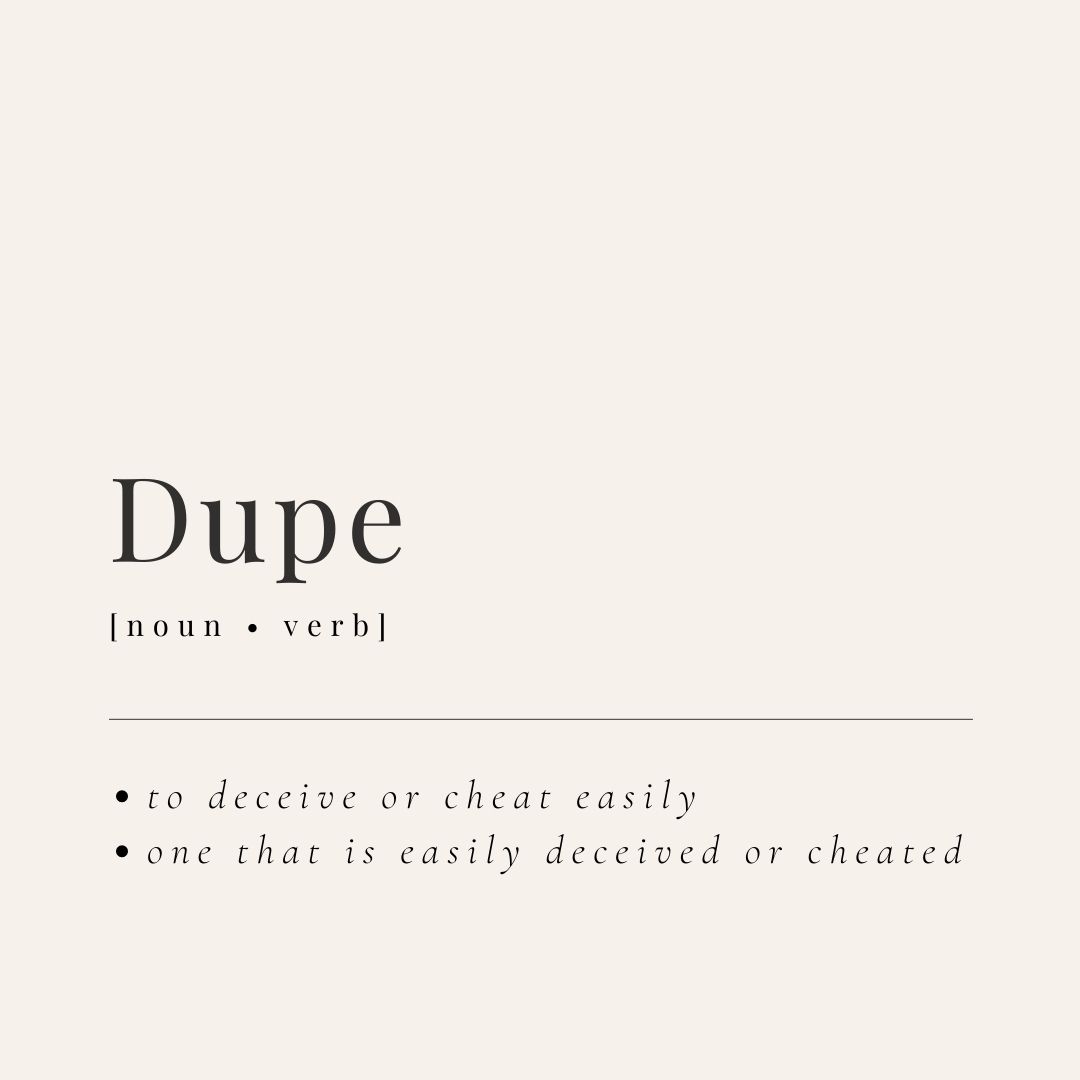
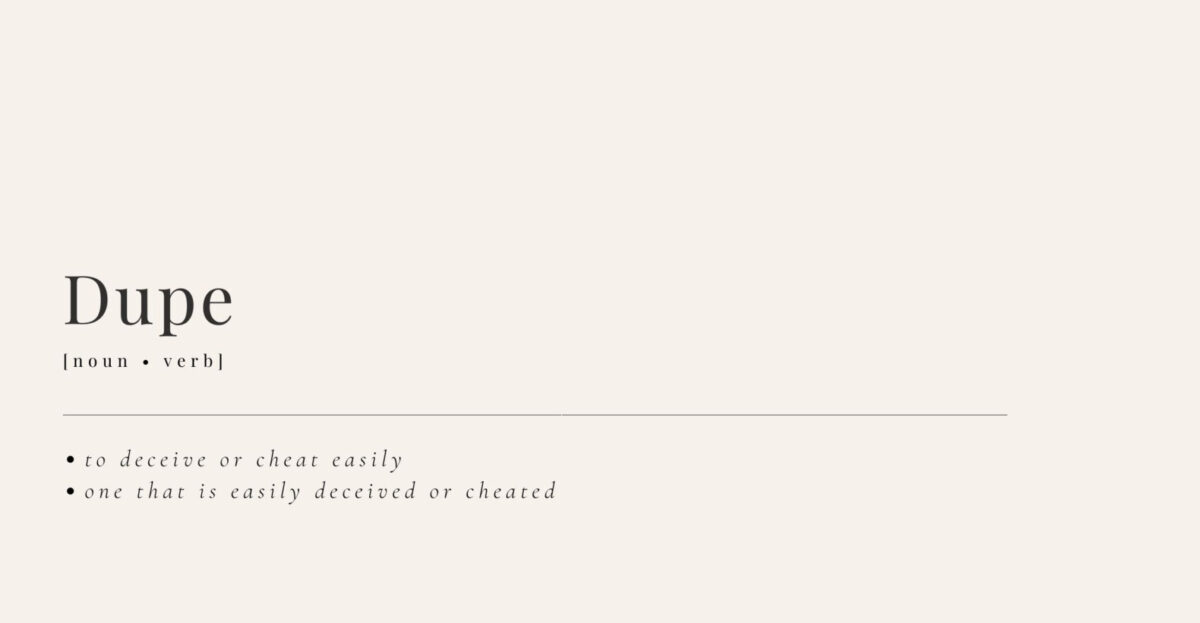
The dictionary definition of a dupe is “an unscrupulous deception”, for even less flattering definitions, check out what Merriam-Webster has to say.
Absolutely nothing associated with the word is positive, yet the seemingly harmless, fluffy world of ‘dupes’ is being celebrated, with influencers too greedy to care and wannabe influencers too stupid to care, proudly showing off their hauls.
Let’s not pretend that those ‘chunky gladiator-style sandals with yellow stitching’ designed to look exactly the same as a well-known brand, but at afraction of the price is anything but a copy, a fake.
That means the entire design and R&D process invested in by the original creator has been copied and reinvented, using cheaper materials.
Copying stuff is stealing, so here’s a radical idea. If you can’t afford to spend £120 on a pair of Dr Martens Blaire sandals, buy something else instead.
The fake mentality
With clothing, footwear and fashion accessories in mind, I can only think that Temu shoppers and those that are clamouring to snap up ‘dupes’ on TikTok shops are the type of people that go on holiday to Turkey and return home dripping in fake designer watches and bags.
You’re buying a stolen, copied product which means the original creator is losing out.
If you can’t afford something, why would you want to pretend that you can? It doesn’t make you look cool or fashionable or rich. It makes you look like an egotistical, insecure idiot.
So let’s please stop making out that ‘dupes’ are a great deal and an innocent way of getting something you want. They are not. You’re buying a stolen, copied product which means the original creator is losing out.
Temu & dupes are killing livelihoods
As a handmade business owner, I know firsthand that the work that goes into creating products is immense. Many artists, handmade and small businesses don’t have even a fraction of the advertising budget that the likes of Temu have at their disposal. They dedicate countless hours dreaming up, designing and making their products, then even more time trying to get seen organically so they can generate, often modest, sales.
Then along comes a China-based manufacturer who takes a look at what’s available in places like Etsy and any clever or cool designs, they simply steal and manufacture at a fraction of the cost.
Not only does this massively undercut the original creator, it also devalues their original work.
That dragon crochet hat that took a week to make from an original pattern and retails for a couple of hundred pounds as a result, gets copied and is now being sold elsewhere for £24.99.
Those layered acrylic hair claws sold at a very reasonable £18.99, that started as an idea, then sketches, then a digital file that was then cut on an expensive laser machine that’s not even close to being paid off and then assembled, photographed and listed…now available on AliExpress for £3.99. All of that work is not only stolen, but irrevocably devalued in an instant.
I don’t think it’s the case that people just fundamentally don’t care. Of course there will always be some that don’t, but I think on the whole, people just don’t stop to think. Lured by cheap prices and the constant promise of something new and better that fuels this capitalist nightmare we find ourselves in.
It’s easier to just click the buy button than it is to stop and contemplate the ethics of what your purchasing decision really means.
That ‘dupe’ is not harmless. That cute felt hat on Temu that looks just like something you saw on Etsy that was much more expensive, is not a bargain. It’s killing the artists and creators that invested so much of their time and creativity into making the original.
Whilst most creators are powerless to stop their designs being copied, consumers absolutely have the power to make an ethical decision.
The longer this theft continues unchecked, the harder it will be for handmade businesses and artists to continue scraping a living whilst huge manufacturers like PDD Holdings Inc. who own Temu, continue to make millions, dodging taxes through loopholes and operate with immunity to Intellectual Property laws.
Read the depressing truth of why It’s Perfectly Legal for Your Chinese Manufacturer to Copy Your Products.
Think before you buy
So please, before you click the buy button, stop for a moment to consider whose livelihood you could be destroying in your pursuit of what you perceive to be a bargain.
If you see something on an online marketplace like Temu that seems to be significantly cheaper than you’d expect, or it’s similar to something you’ve seen elsewhere, it could be that the design has been stolen. Every sale of that product given to the likes of Temu is directly and adversely impacting the very real person, or people that originally created it.
Your Temu or innocent seeming TikTok ‘dupe’ purchasing decision has very real, sometimes devastating consequences.